Lenovo Legion R27qe Gen 2: Best Overall Gaming Monitor
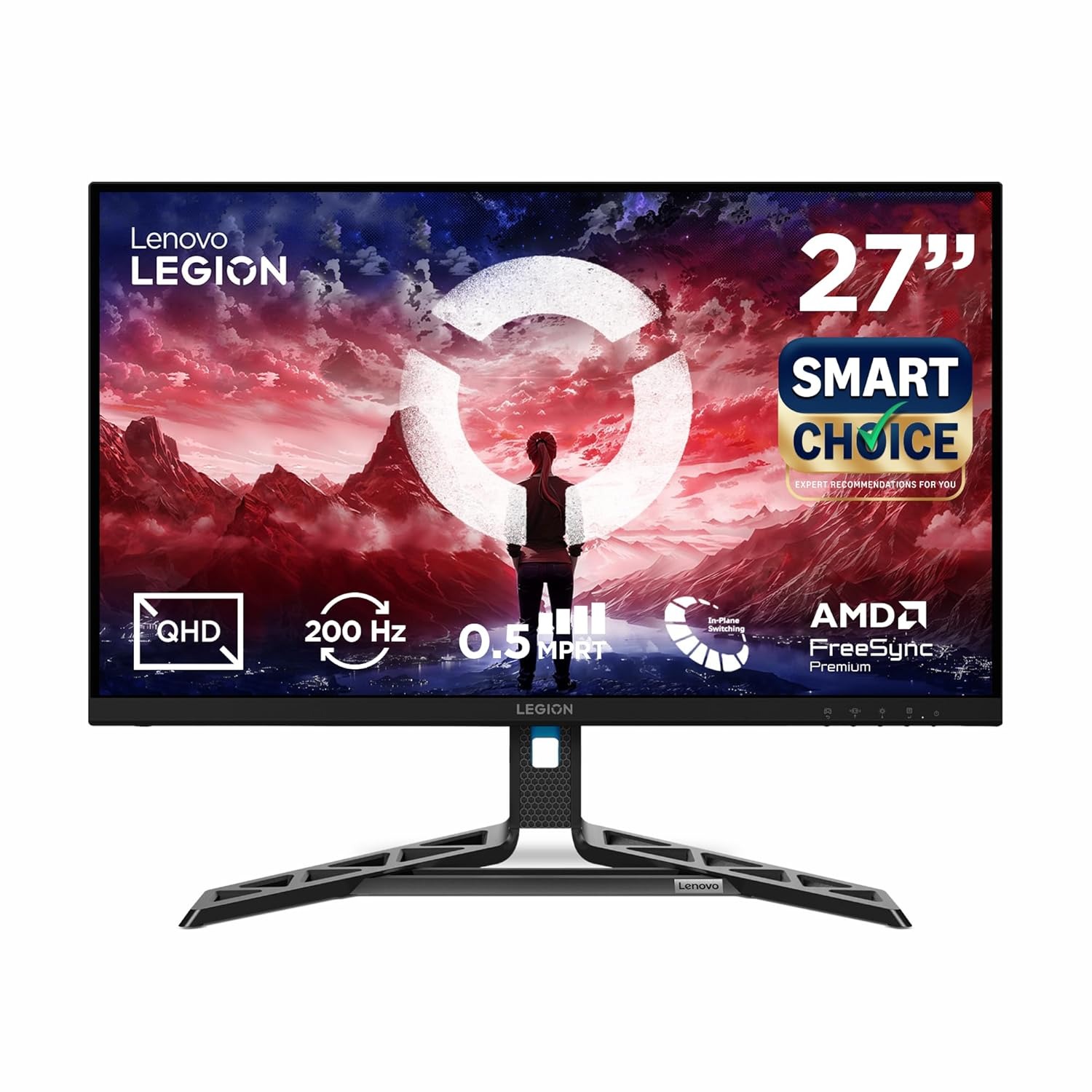
The Lenovo Legion R27qe Gen 2 is the general recommendation if you just want one solid 27 inch monitor and nothing to think twice about. It packs a QHD IPS panel with a 200Hz refresh rate, so it is fast enough for competitive games and sharp enough for everything else. The stand tilts, swivels, pivots and adjusts for height, which most budget monitors skip entirely. Colours are accurate out of the box thanks to 99% sRGB coverage, and the Legion badge means solid after sales support in India. If you only buy one gaming monitor this year, this is the safe, well rounded pick.
- 27in QHD 200Hz IPS
- 0.5ms, FreeSync Premium
- Full ergonomic stand (tilt, swivel, pivot, height)
- 99% sRGB, accurate colours out of the box
- No USB-C
- No HDR certification
Acer Nitro XV272U X1: Best Value 1440p Monitor
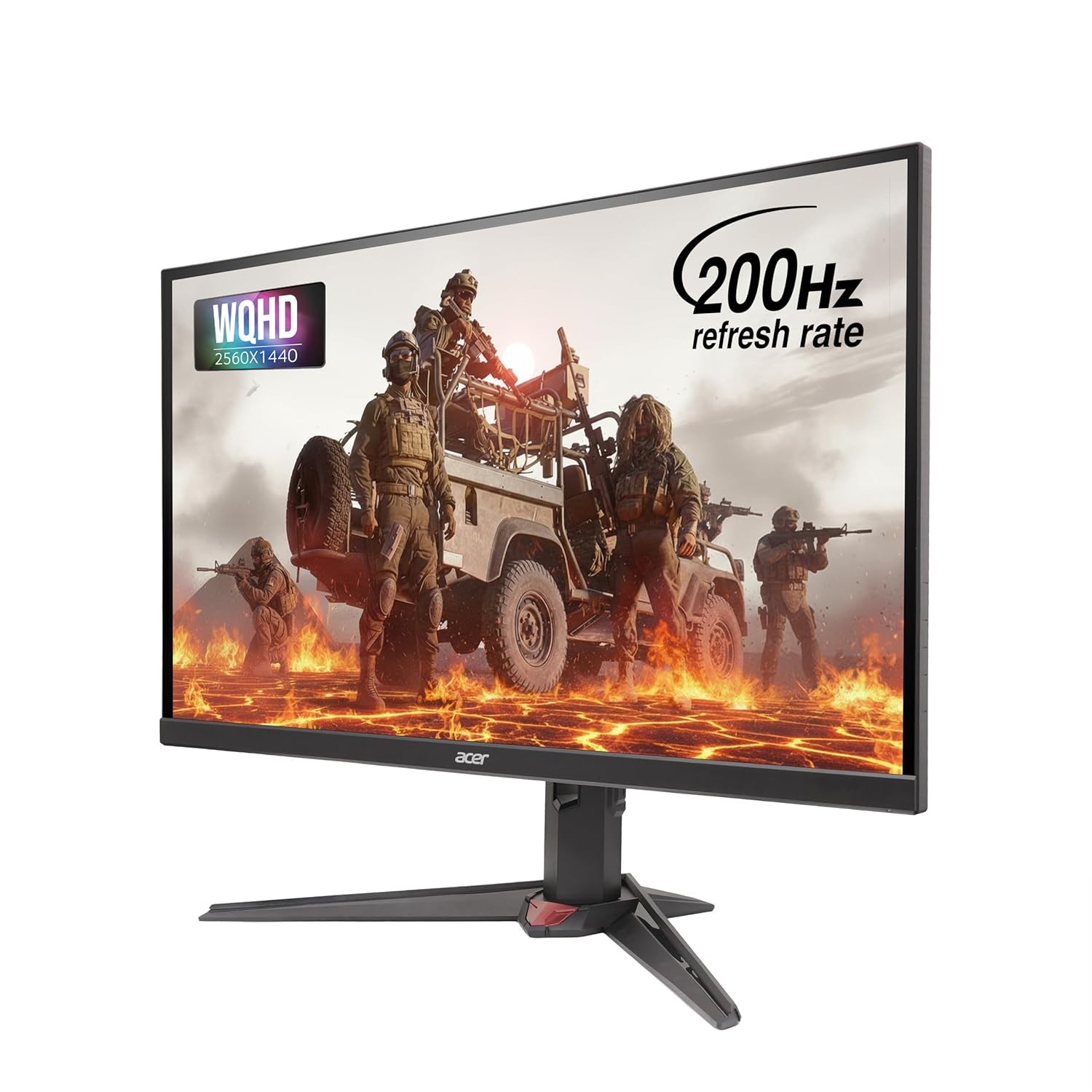
If the Legion is a touch over budget, the Acer Nitro XV272U X1 is the cheapest clean way into 1440p gaming in India. You get a 27 inch QHD IPS panel and a 200Hz refresh rate for around fifteen thousand rupees, which is remarkable. Colours are good, motion is smooth, and it handles both esports and story games without fuss. It is an older design so the stand and styling are plain, but the panel is what matters and this one punches well above its price. A brilliant first 1440p monitor.
- 27in QHD 200Hz IPS
- 1ms, FreeSync Premium
- 1440p 200Hz for about ₹15k
- Reliable, widely reviewed panel
- Basic stand and build
- No USB-C or HDR
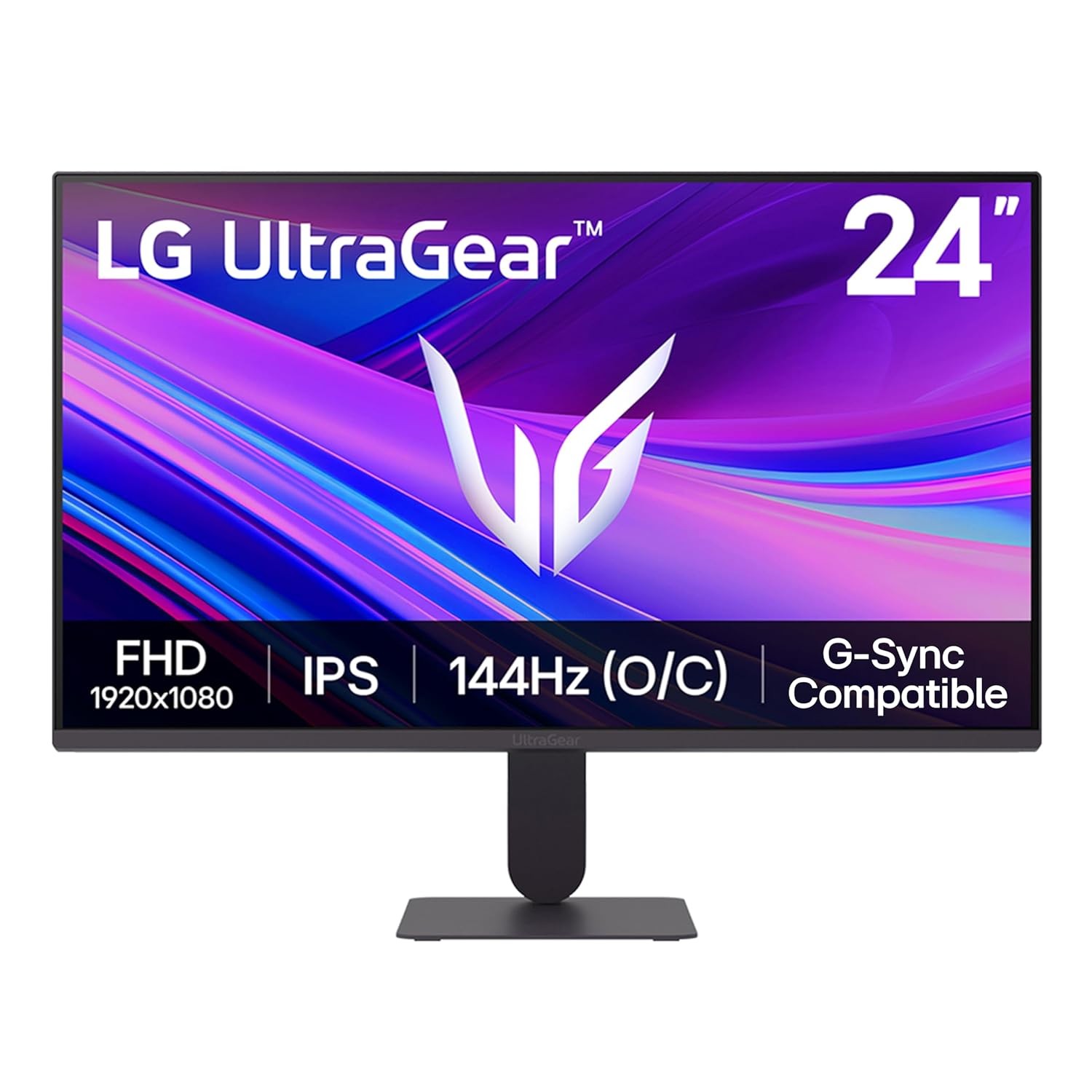
LG 24G411A-B: Best Budget Monitor
For under ten thousand rupees this LG UltraGear is the safe budget pick, the monitor I would put in a first gaming build without a second thought. A 24 inch 1080p IPS panel at 144Hz is easy for even modest GPUs to drive, so you actually feel that high refresh rate instead of chasing it. Colours are better than you expect at this price, input lag is low, and it is G-Sync compatible. It will not wow anyone at 1440p, but as a dependable, fast, well supported budget screen it is hard to beat.
- 24in FHD 144Hz IPS
- 1ms MBR, G-Sync compatible
- 144Hz IPS under ₹10,000
- Easy to drive on a budget GPU
- 1080p looks soft up close
- Limited stand adjustment
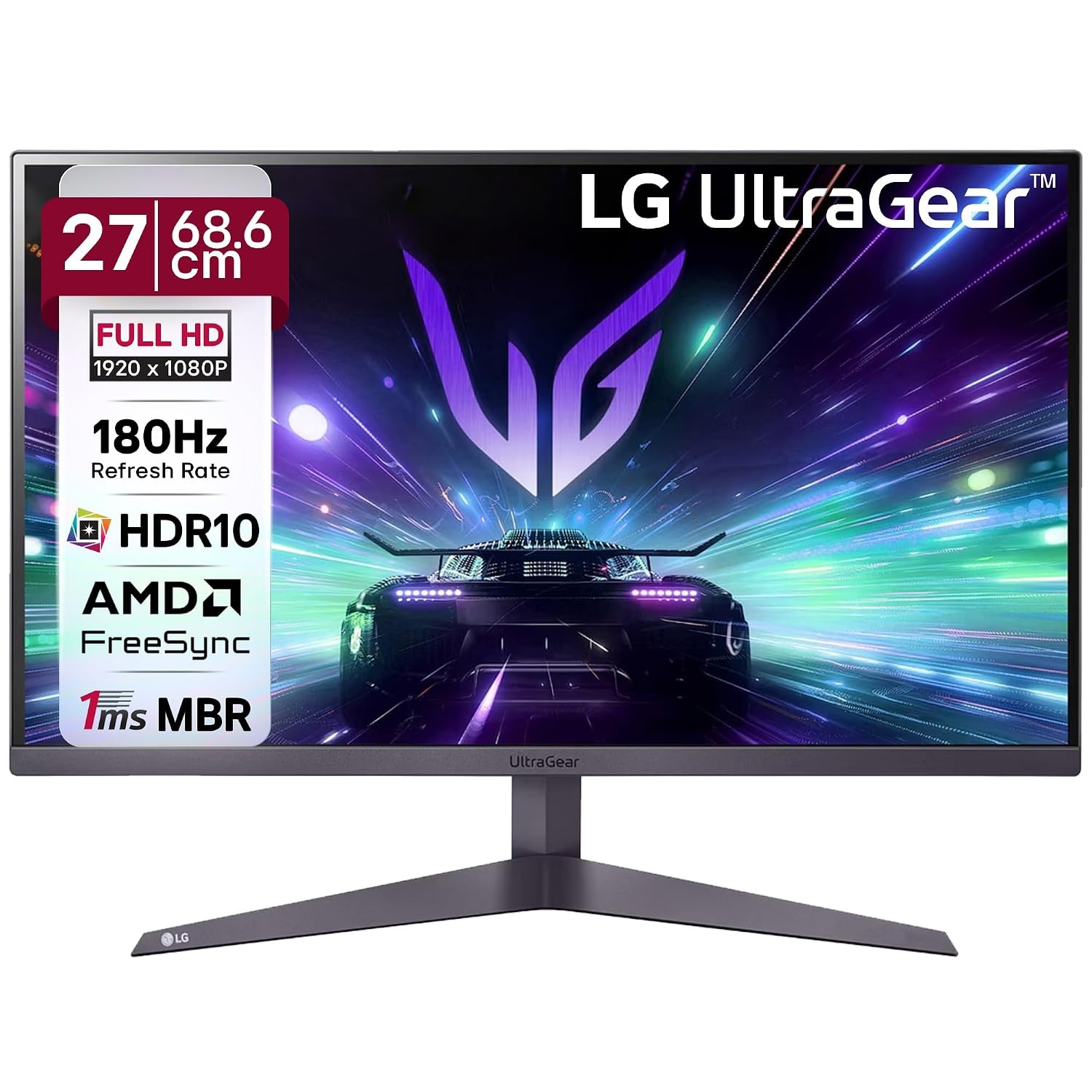
LG 27GS50F: Best 1080p Monitor for Esports
If you mostly play Valorant, CS2 or BGMI and care about frames over pixels, the 27GS50F is built for you. It stays at 1080p, which is far easier to push to high frame rates, but bumps the refresh rate to 180Hz and the size to a comfortable 27 inches for around eleven thousand rupees. That combination is exactly what competitive players want, smooth fast motion without needing a top end graphics card. It is a no frills panel, but for pure esports value it is one of the smartest buys on this list.
- 27in FHD 180Hz
- 1ms, AMD FreeSync
- 180Hz at a low price
- 1080p is easy to run at high FPS
- 1080p on 27in is not the sharpest
- Colour is good, not great
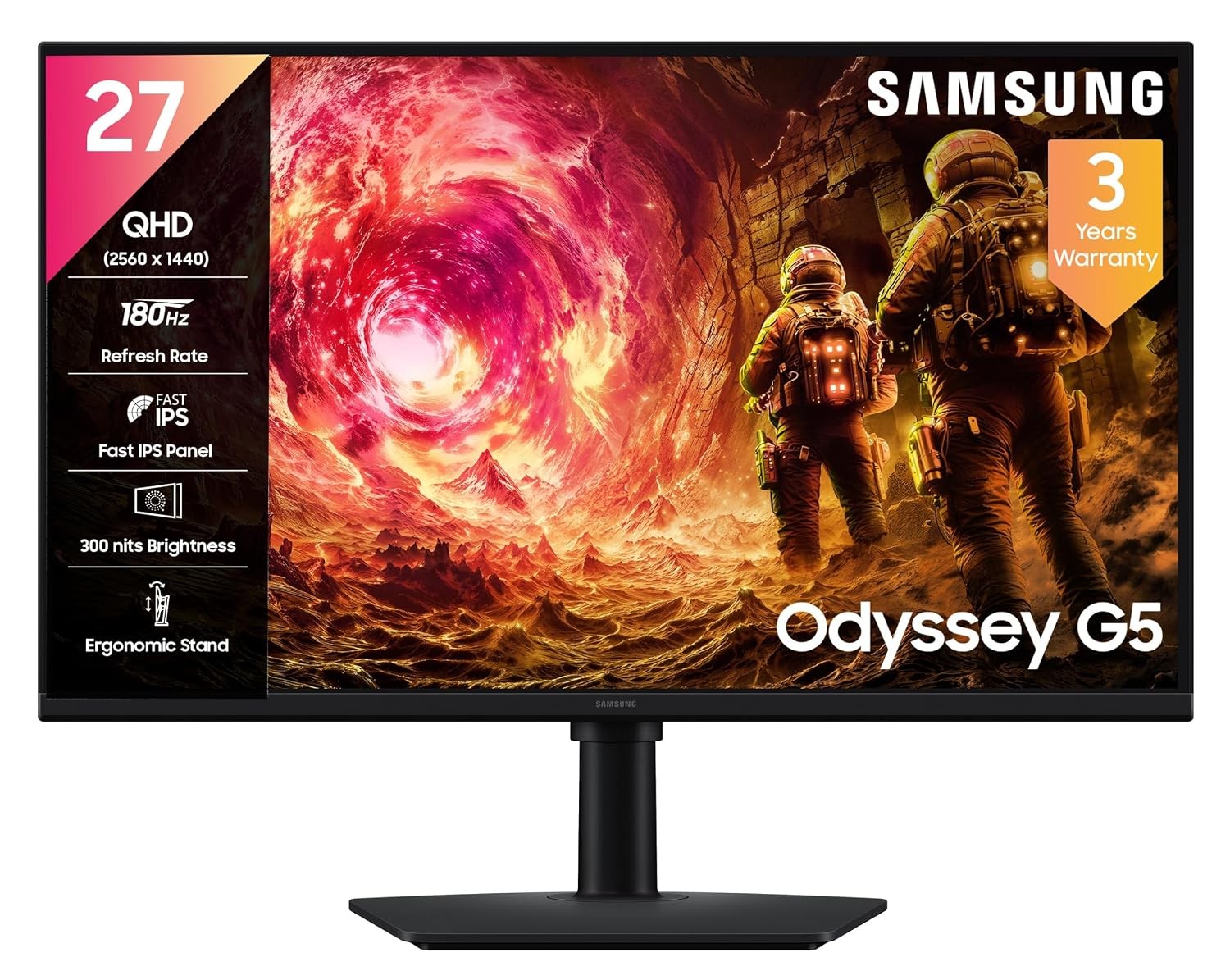
Samsung Odyssey G5: Best Samsung QHD Monitor
Samsung refreshed the Odyssey G5 with a Fast IPS panel, and it is a strong all rounder at around twenty two thousand rupees. You get 27 inch 1440p sharpness, a 180Hz refresh rate and basic HDR10, wrapped in Samsung's tidy design and reliable panel supply. It is not the fastest here at 180Hz, but for most gamers who split time between competitive and single player titles it hits a lovely balance of clarity and smoothness. If you like Samsung's ecosystem and support, this is the QHD pick to shortlist.
- 27in QHD 180Hz Fast IPS
- 1ms, HDR10, DisplayPort
- Fast IPS with punchy motion
- Tidy design and good support
- HDR is entry level only
- Costs a little more than rivals
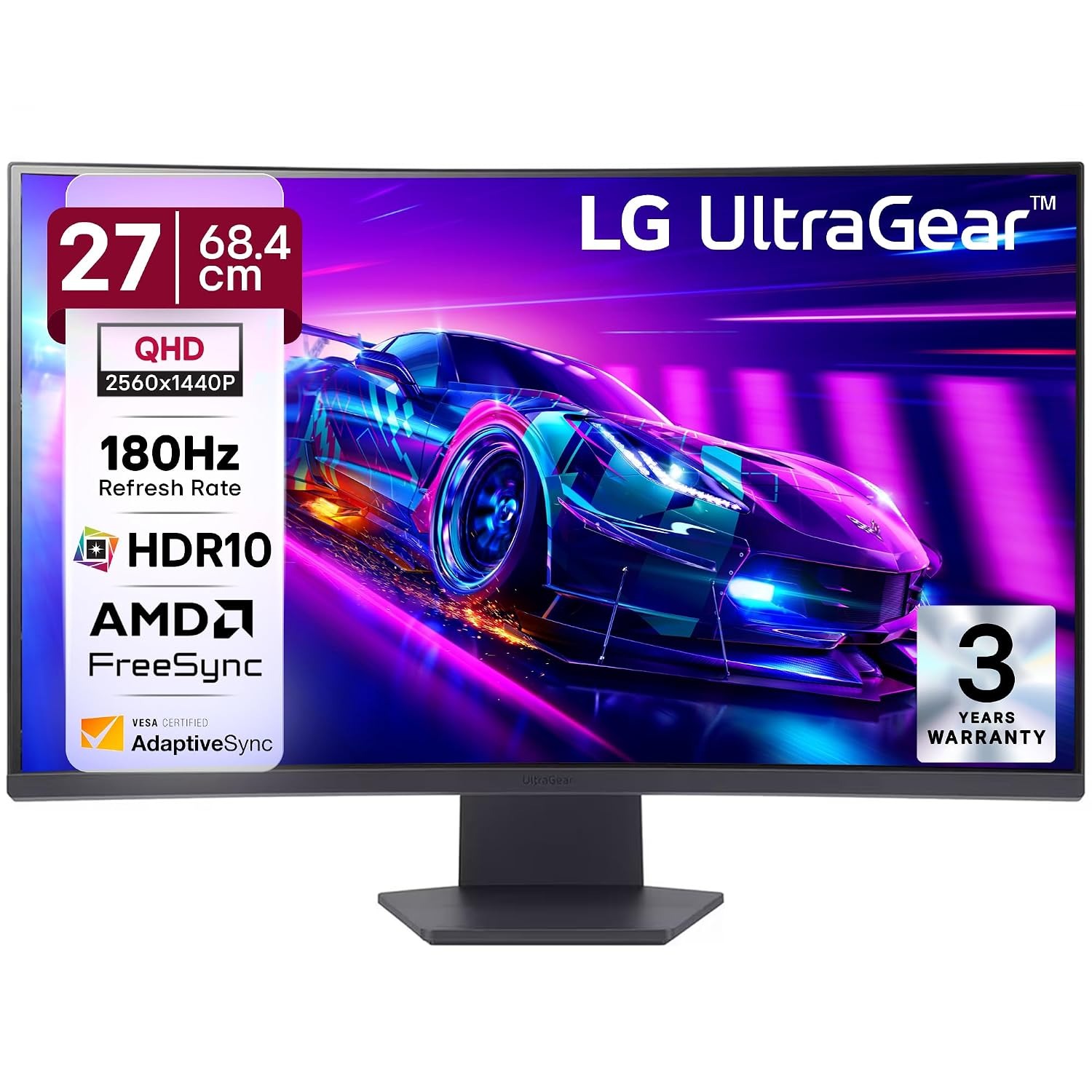
LG 27GS60QC: Best LG QHD All-Rounder
The LG 27GS60QC brings LG's UltraGear pedigree to a properly curved 27 inch QHD screen, which wraps the image around your peripheral vision during racing and open world games. It runs at 180Hz with 1ms response, has AMD FreeSync support, and keeps a virtually borderless three side design that looks great in a multi monitor setup. Build quality is typical LG, sturdy and understated rather than flashy. It is not the fastest panel on this list but the curve adds an immersion the flat monitors here cannot match. A strong all rounder for anyone who wants QHD with a bit more presence on the desk.
- 27in curved QHD 180Hz
- 1000R curve, FreeSync
- Immersive curved 1000R screen
- Borderless 3 side design
- Only 180Hz, not the fastest here
- No USB-C
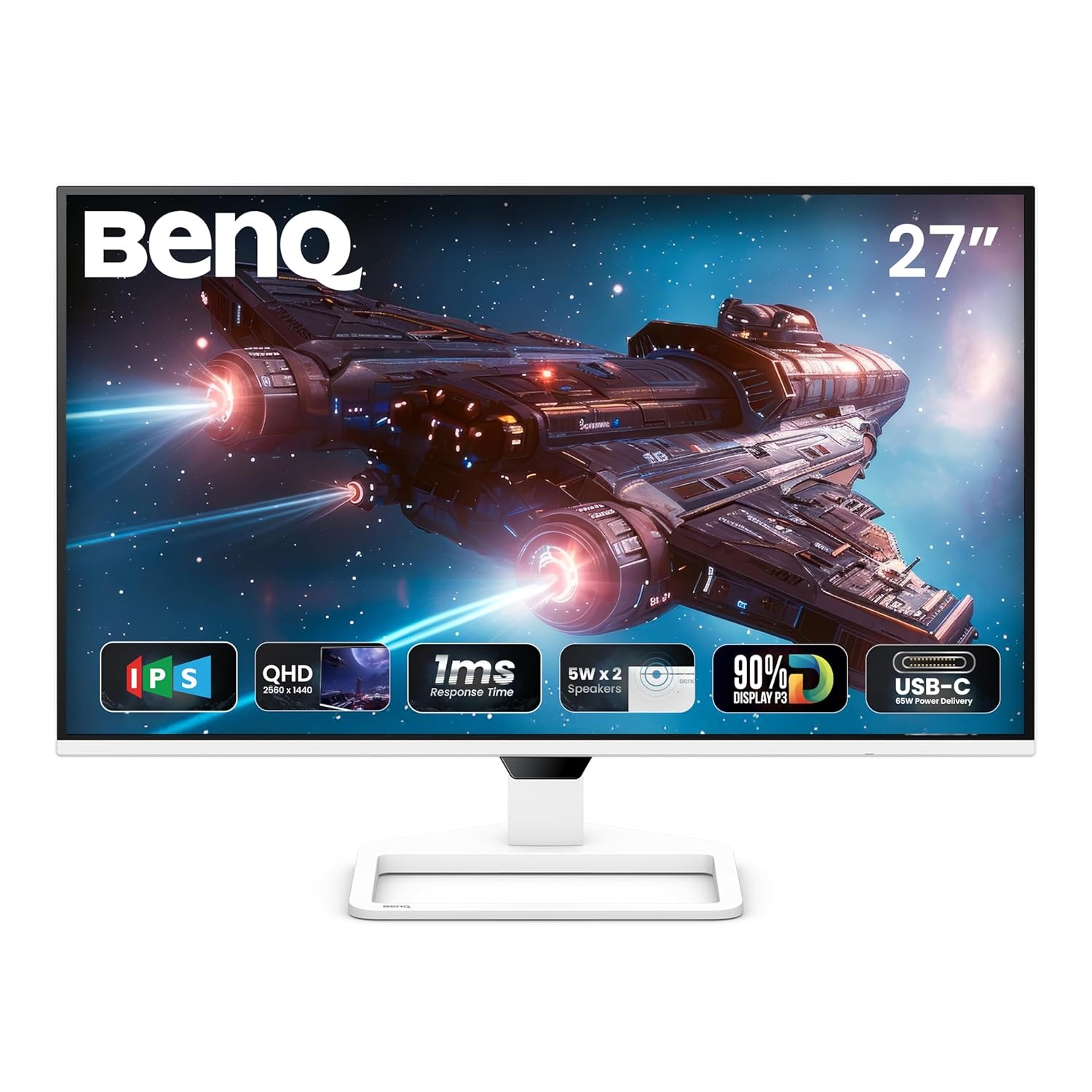
BenQ EW270Q: Best Premium QHD Monitor
BenQ built its name on eye friendly displays, and the EW270Q carries that reputation into a proper 200Hz QHD gaming monitor. HDRi mode automatically adjusts contrast based on room lighting, which is genuinely useful if your setup gets sun through a window. It has built in 5W stereo speakers loud enough for casual use, and a single USB-C cable can carry video, data and 65W of laptop charging at once. Colour coverage sits at 90% DCI-P3, comfortably ahead of most monitors in this price band. It is a smart pick for anyone who splits time between gaming and general desk work.
- 27in QHD 200Hz IPS
- USB-C 65W, built-in speakers
- HDRi auto contrast adjustment
- USB-C single cable convenience
- Speakers are basic, not a soundbar replacement
- FreeSync only, no G-Sync branding
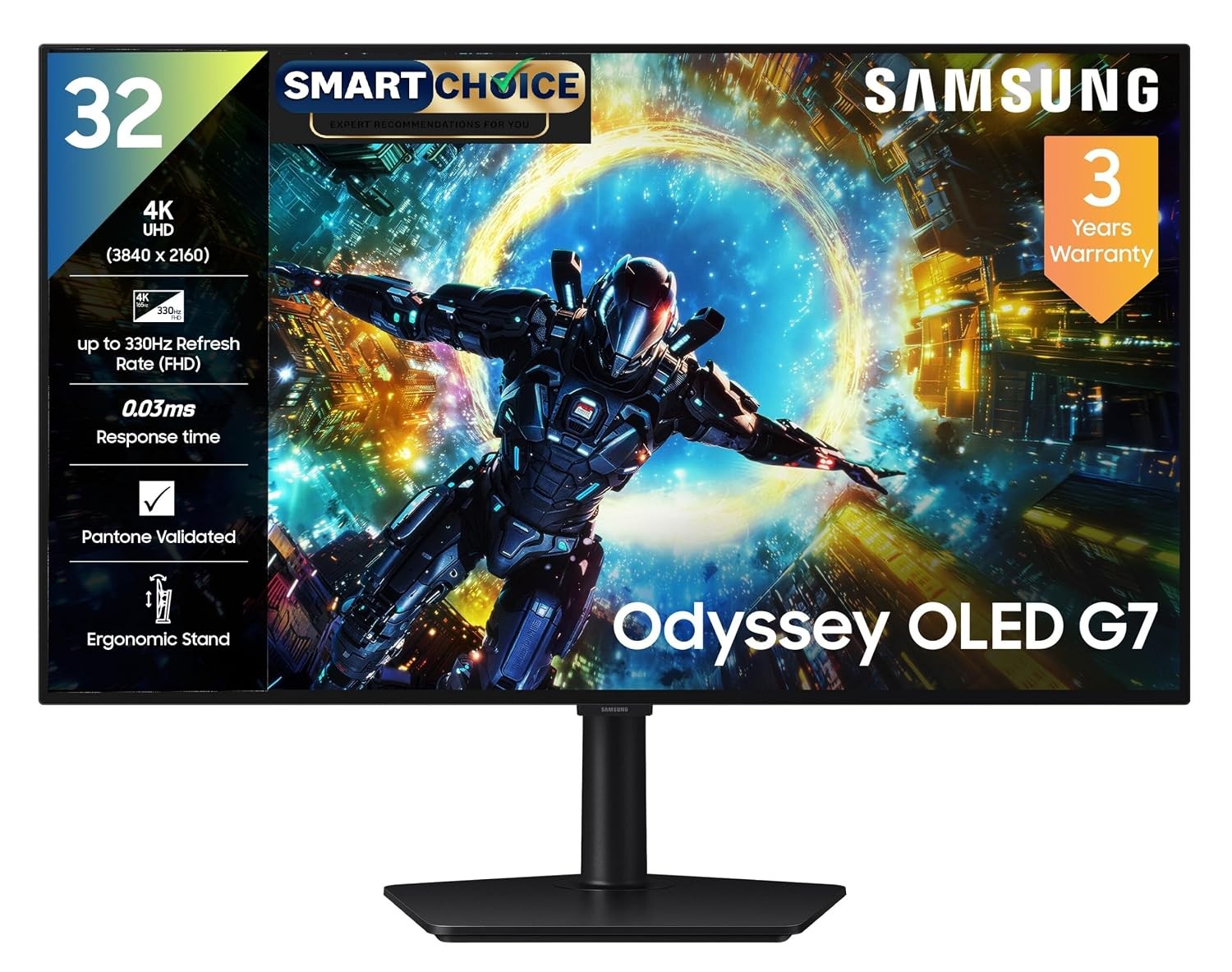
Samsung Odyssey OLED G7: Best 4K OLED Value
This is where things get aspirational. The 32 inch Odyssey OLED G7 brings 4K resolution and a genuine OLED panel, which means perfect blacks, dazzling contrast and near instant pixel response, for around seventy five thousand rupees. That is a lot of money, but it is also a lot less than OLED cost a year ago. Games look incredible, HDR finally means something, and 165Hz keeps motion smooth. You need a serious GPU to feed 4K, but if you have one, this is the point where a monitor starts to feel like an event.
- 32in 4K OLED 165Hz
- 0.03ms, HDR, DisplayPort
- True OLED contrast at 4K
- Big 32in canvas for games and work
- Needs a powerful GPU for 4K
- OLED needs care against burn-in
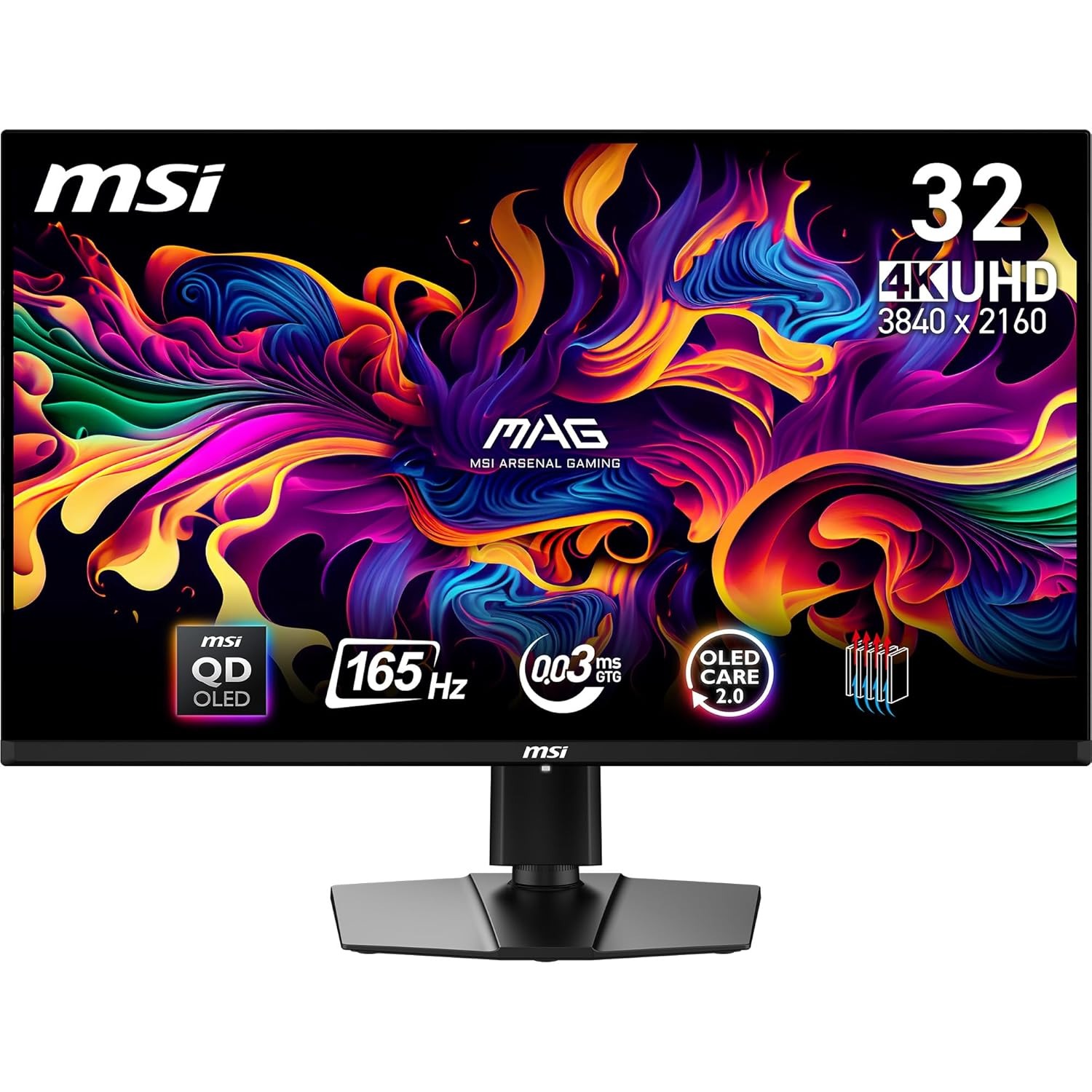
MSI MAG 321UP QD-OLED: Best High-Refresh 4K OLED
The MSI MAG 321UP is a genuine 4K OLED panel at 31.5 inches, and the jump from LED to QD-OLED is obvious the moment you turn it on: blacks are truly black and colours pop without looking oversaturated. A 165Hz refresh rate at full 4K resolution is still rare at this price, and response time is essentially instant at 0.03ms. DisplayHDR True Black 400 certification means HDR content actually looks the way it is meant to, not just brighter. Stock on this one moves fast and quantities are limited, so if you want a flagship 4K OLED without flagship pricing, do not wait around. This is the biggest upgrade on the list if you are coming from a standard LED monitor.
- 31.5in 4K UHD QD-OLED
- 165Hz, 0.03ms, HDR True Black 400
- True 4K OLED contrast and colour
- 165Hz is fast for native 4K
- Stock is very limited right now
- Premium price for a monitor
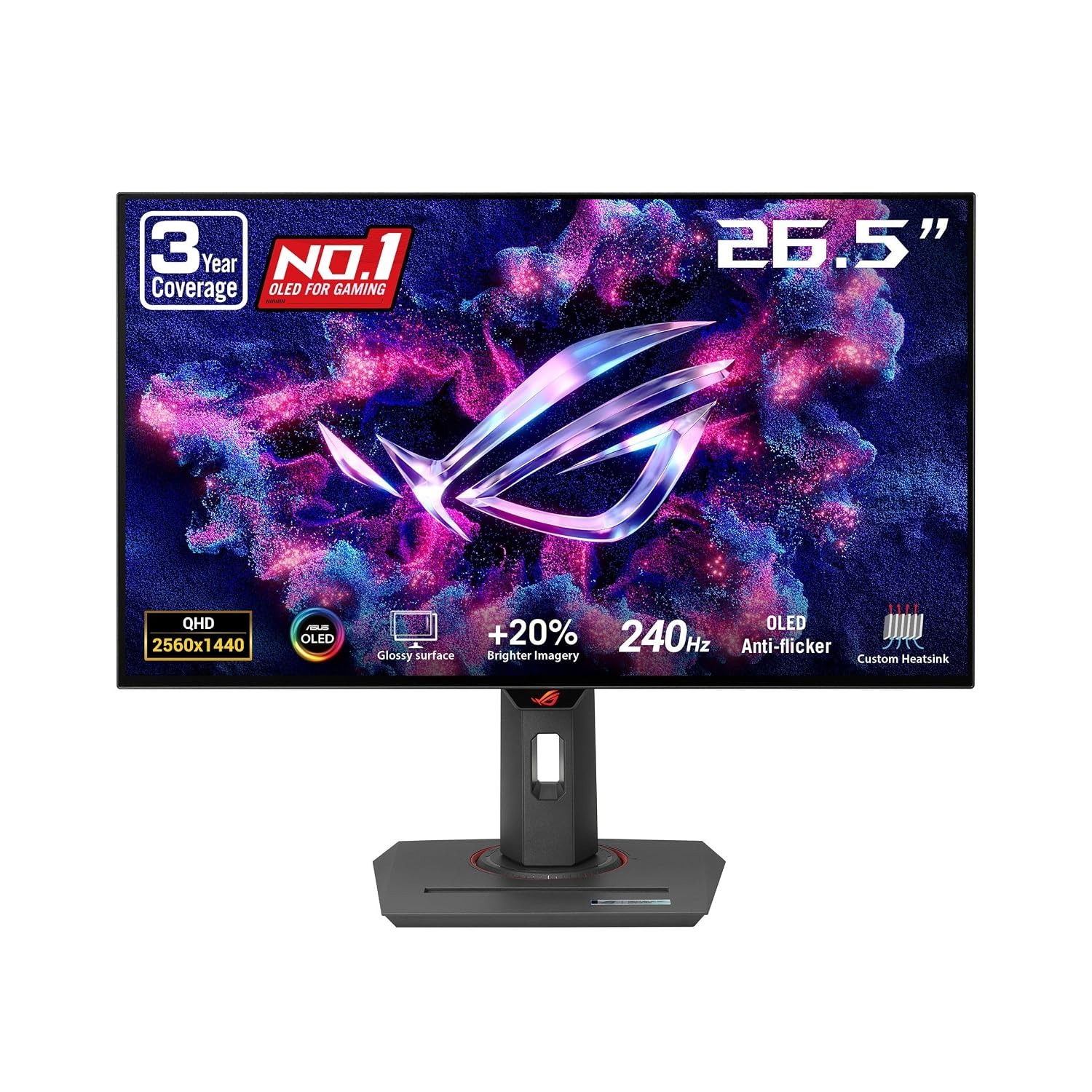
ASUS ROG Strix XG27AQDMG: Best Premium Flagship
The ASUS ROG Strix XG27AQDMG is built for players who care more about frame rate than anything else: a 27 inch QHD OLED panel running at 240Hz with a 0.03ms response time. G-Sync compatibility keeps everything tear free even during fast paced firefights, and ASUS's custom heatsink design helps the OLED panel handle sustained brightness without the burn in worries older OLED monitors carried. With over 750 reviews and a strong rating, it has proven itself well beyond early adopter numbers. It costs more than everything else on this list, but if competitive shooters are your main use case, this is the ceiling right now.
- 27in QHD OLED 240Hz
- 0.03ms, G-Sync Compatible
- Blazing 240Hz OLED for competitive play
- 756+ reviews, proven reliability
- Most expensive monitor on this list
- QHD, not 4K, at this price